





Women’s Night Match at the French Open: A 3-Year Wait
Women Waited Three Years for a Night Match at the French Open. It Took the Men’s Draw Falling Apart.
On the 1st of June, Aryna Sabalenka and Naomi Osaka walked out under the lights at Roland Garros. It was the first time in nearly three years that a women’s match had been given the night session on the French Open’s biggest court. Three years. Let that sit for a second.
I build sports bras for a living. I spend my days thinking about how to get women onto the start line, the pitch and the court properly supported, not held back by their kit. So when I watch the best players in their sport kept off the main stage after dark for three years running, it gets under my skin. Not because the tennis isn’t good enough. Because somebody decided it wasn’t worth the prime slot.
So what actually happened at the French Open?
Sabalenka beat Osaka 7-5, 6-3 in the night session on Court Philippe-Chatrier on 1 June 2026. It was the first women’s singles match in that slot since June 2023. The night session launched in 2021: one match a day, 8.15pm, the lights on, a premium ticket, broadcast in France only on Amazon Prime. The marquee slot. The one everyone talks about the next morning.
Before this year, more than 50 of those slots had been handed out and exactly four went to women. Fewer than one in fourteen. In 2024 there were eleven night matches and not one was a women’s match. In 2025, same again. Zero.
Why did it take so long?
Because for three years the night slot quietly meant the men’s draw. This year it took the men’s side falling apart for the women to get a look in. Jannik Sinner went out in the second round. Novak Djokovic in the third, his earliest exit there since 2009. Carlos Alcaraz, the two-time defending champion, withdrew injured before he’d hit a ball. By that Monday the top half of the men’s draw had no former Grand Slam champion left in it for the first time in fifteen years.
Only then did “the best match of the day” happen to point at the women. The official reasoning has always been about length: men play best of five sets, women best of three, so a men’s match gives ticket-holders more tennis for their money. Tournament director Amélie Mauresmo, a former world No. 1 herself, put it like this when she was pushed on it: “It has never been that the girls are not worthy to play at night.”
Maybe not in words. But three years of scheduling says it plenty loud.
Haven’t the players been saying this for years?
Yes. Loudly. Ons Jabeur, on the people doing the scheduling: “I don’t think they have daughters.” Iga Świątek: “It would be nice if we had women’s matches as well.” Sabalenka, back in 2025: “We deserve equal treatment. There were a lot of great battles that would be cool to see as a night session. We deserve to be put on a bigger stage.”
They’re not asking for a favour. They’re asking for the spotlight their tennis already earns.
Hasn’t women’s tennis already won on equal pay?
At the majors, yes, and that genuinely matters. Tennis is the rare sport where women compete for the same prize money as men at the biggest events. The US Open got there first in 1973, when Billie Jean King forced the issue. The Australian Open followed in 2001, Roland Garros in 2006, Wimbledon in 2007. All four majors, level at the top. No other major sport, team or individual, can say the same.
And the WTA isn’t finished. It’s committed to equal prize money at combined ATP and WTA events by 2027, and at the rest by 2033. The direction is set. Credit where it’s due.
So what’s the problem?
Equal cheques don’t buy equal visibility. Away from the four majors the pay gap is still wide. And even at Roland Garros the maths is telling: the prize pot grew 5.4% in 2025 while the tournament’s revenue jumped 14%, to €395 million. When players pushed back, Mauresmo’s answer was blunt. “We are not going to change anything. We are going to initiate discussions.”
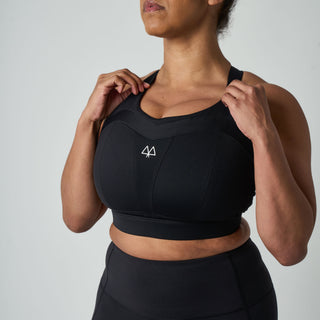
Here’s the bit I care about most. (A’hem, this is where MAAREE comes in.) Visibility is how girls decide a sport is for them. A ten-year-old up past her bedtime at 8.15pm sees exactly who’s worth staying up for. If that’s only ever the men, year after year, she learns something she shouldn’t. We started MAAREE in 2018 because women were being treated as an afterthought in sport, right down to the kit that was supposed to hold them. Putting our name behind Millie Bright, Volleyball England, Sale Sharks Women and London Roller Derby is the same fight from a different corner. Women’s sport deserves the cameras, the lights and the late slot.
What would a level playing field actually look like?
It isn’t one grand gesture. It’s the boring decisions, made fairly, over and over. Who goes on Chatrier at 8.15. Whose match leads the broadcast. Whose name sells the ticket. Make those calls fairly every year, and not only on the one night the men’s draw leaves you no other option.
Sabalenka and Osaka filled the stands and pulled a global audience, because of course they did. The tennis was never the question. Now the sport has to decide whether that night was a one-off or the new normal.
I know which one I’m backing. Want to back yourself while you’re at it? Get properly fitted, then go take your stage. We go again.
FAQs
When did a women’s match last feature in the French Open night session before 2026?
June 2023, when Sabalenka beat Sloane Stephens. After that, 19 consecutive night sessions went to the men before Sabalenka v Osaka on 1 June 2026 broke the run.
Why does the French Open schedule mostly men’s matches at night?
The tournament’s stated reason is match length. Men play best of five sets and women best of three, so organisers argue a men’s match gives the premium ticket-holders more tennis. Critics say it keeps women off the sport’s biggest stage.
How many night sessions have ever gone to women?
Before 2026, just four out of more than 50 since the format began in 2021. The Sabalenka v Osaka match was the fifth.
Who won the Sabalenka v Osaka night match in 2026?
Aryna Sabalenka, 7-5, 6-3. It was her third win over Osaka that season.
Do men and women earn equal prize money at the French Open?
Yes. Roland Garros has paid equal prize money to its singles champions since 2006.
When did all four Grand Slams reach equal prize money?
The US Open led in 1973, the Australian Open followed in 2001, Roland Garros in 2006 and Wimbledon in 2007.
Is prize money equal across the whole of women’s tennis?
Not yet. It’s equal at the four majors, but away from them a gap remains. The WTA has committed to equal prize money at combined events by 2027 and at its remaining events by 2033.
Why does a prime-time slot matter so much?
It’s where the biggest live and broadcast audiences are, and it’s where new fans, especially young girls, decide a sport is worth following. You can pay players equally and still keep them out of the spotlight.
Want more handy tips?
The sizing checklist Mari runs through in every fitting, plus first dibs on new colours. No spam. Just support that fits.

Blog posts

Check Your Boobs: Here's What You Can Do for Breast Health Awareness
Awareness is cool, but how do you move from awareness to action and actually check your boobs? Here are +10 things you can do starting from today.
Read more
9 Clear Signs That Your Bra Doesn't Fit You
Nine checks you can run in front of a mirror to tell whether your bra actually fits, from a band that rides up to straps that dig in, with the fix for each one.
Read more
Why Are My Breasts Coming Out of the Bottom of My Bra?
Boobs falling out of the bottom of your bra? It is nearly always the band or the cup. Here is how to tell which one is causing it, and fix it in about five minutes in front of a mirror.
Read more